
Order before 3pm Mon–Fri for same-day dispatch99%+ Purity Guaranteed on Every BatchDiscreet Plain Packaging on All OrdersFast UK Next-Day Delivery AvailableBatch-Specific COA (See Product)Research Use Only — Not for Human or Veterinary Use15 Years of Experience Supplying UK ResearchersOrder before 3pm Mon–Fri for same-day dispatch99%+ Purity Guaranteed on Every BatchDiscreet Plain Packaging on All OrdersFast UK Next-Day Delivery AvailableBatch-Specific COA (See Product)Research Use Only — Not for Human or Veterinary Use15 Years of Experience Supplying UK Researchers
Bacteriostatic Water vs Sterile Water for Research Peptides
Reconstitution Guides

Bacteriostatic Water vs Sterile Water for Research Peptides

25 JUL 20265 min read34,890 views

A clear research comparison: when to choose bacteriostatic water versus sterile water for reconstituting lyophilised peptides in the lab.

Which water should your lab use?

When reconstituting lyophilised research peptides, the solvent is part of experimental control. The two most common aqueous options are bacteriostatic water and sterile water. Both are used in laboratory settings; they are not interchangeable for every protocol.

This comparison is for research planning only. Products from My UK Peptides are for laboratory use — not for human or veterinary use.

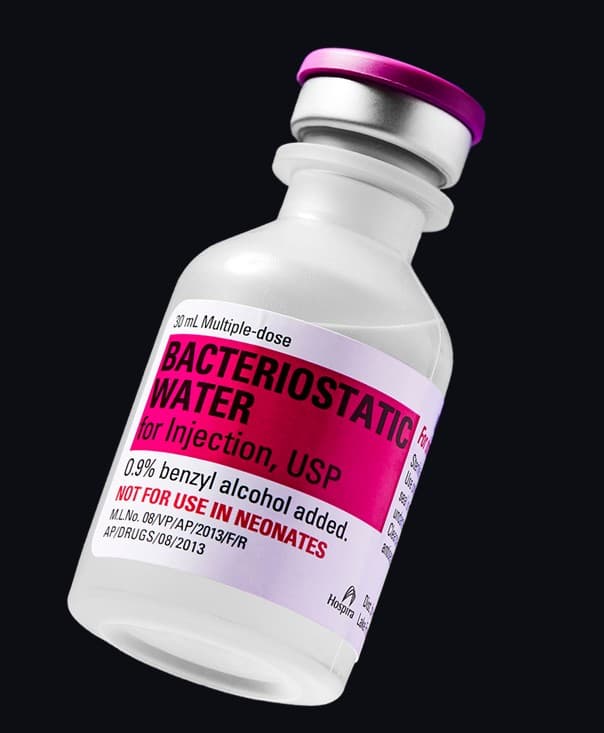
Bacteriostatic water

Sterile water containing a preservative (commonly 0.9% benzyl alcohol). The preservative helps limit microbial growth after the vial stopper has been punctured, which is why many researchers prefer it when a reconstituted vial will be accessed more than once under controlled lab practice.

Sterile water

Water that has been sterilised but typically contains no bacteriostatic preservative. Once opened and accessed, contamination risk rises faster than with bacteriostatic water. Many protocols treat sterile-water reconstitutions as short-window or single-session preparations unless institutional rules say otherwise.

Side-by-side comparison

Factor Bacteriostatic water Sterile water
PreservativeUsually yes (e.g. benzyl alcohol)No
Multi-access vialsOften preferredHigher contamination risk
Typical lab use caseReconstituted stock drawn over several sessionsShort-window or single-session work
Assay caveatsConfirm preservative is compatible with your methodNo preservative interference, shorter hold time

Research tip: Always follow your institutional protocol. If your assay is sensitive to benzyl alcohol, sterile water (or another approved solvent such as dilute acetic acid for poorly soluble sequences) may be required instead.

Practical recommendation

  • Default for many multi-access research reconstitutions: bacteriostatic water
  • Preservative-sensitive assays or very short hold times: sterile water (with strict aseptic technique)
  • Poorly soluble peptides: see acetic acid guidance on our reconstitution resources

Lab supplies at My UK Peptides

We supply bacteriostatic water and related laboratory reconstitution materials alongside research peptides on myukpeptides.com. For a fuller solvent overview, see our guide on bacteriostatic water for peptide reconstitution. Research use only.

#bacteriostatic water#sterile water#reconstitution#research#lab supplies
Research Use Disclaimer: All content published on the My UK Peptides research blog is for educational and informational purposes only. Products sold by My UK Peptides are strictly for scientific research use and are not intended for human or veterinary use. Nothing on this page constitutes medical advice. Always follow your institution's ethical guidelines and applicable regulations.

Research Use Only

For laboratory research use only. Not for human or veterinary use.

Not for Human Use

Products are not intended for human or veterinary consumption.

Quality Guaranteed

Rigorous quality control on every batch from our state-of-the-art laboratory.

© My UK Peptides (Research Only) — All rights reservedUK's No 1 Peptides Supplier — Established 15 years! Research-use-only products.